
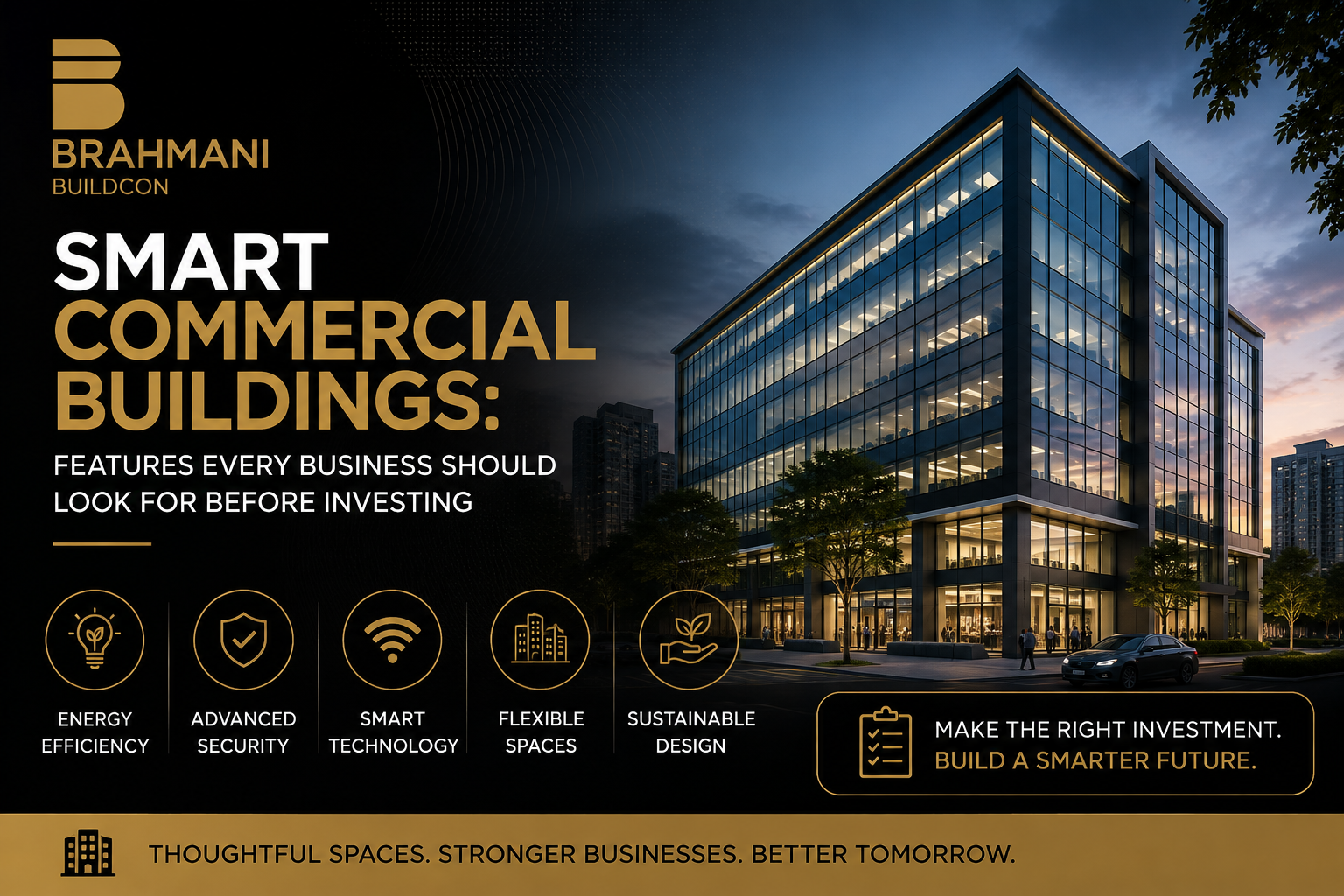
Commercial buildings are changing quickly. Today, businesses look beyond location and floor space. They also want better security, lower energy costs, reliable connectivity, sustainability, and comfortable workspaces.
A smart commercial building uses technology to manage important systems such as lighting, security, energy, climate control, and access. These features can improve daily operations and help businesses prepare for future needs.
If you are comparing projects from a commercial construction company in Ahmedabad, understanding these features can help you make a smarter investment.
What Is a Smart Commercial Building and Why Is It Becoming the New Standard?
How Smart Technology Is Transforming Modern Workspaces
Smart technology connects different building systems so they can work more efficiently. Sensors, automation, and connected devices help manage lighting, temperature, security, energy use, and building access.
The Difference Between Traditional and Smart Commercial Buildings
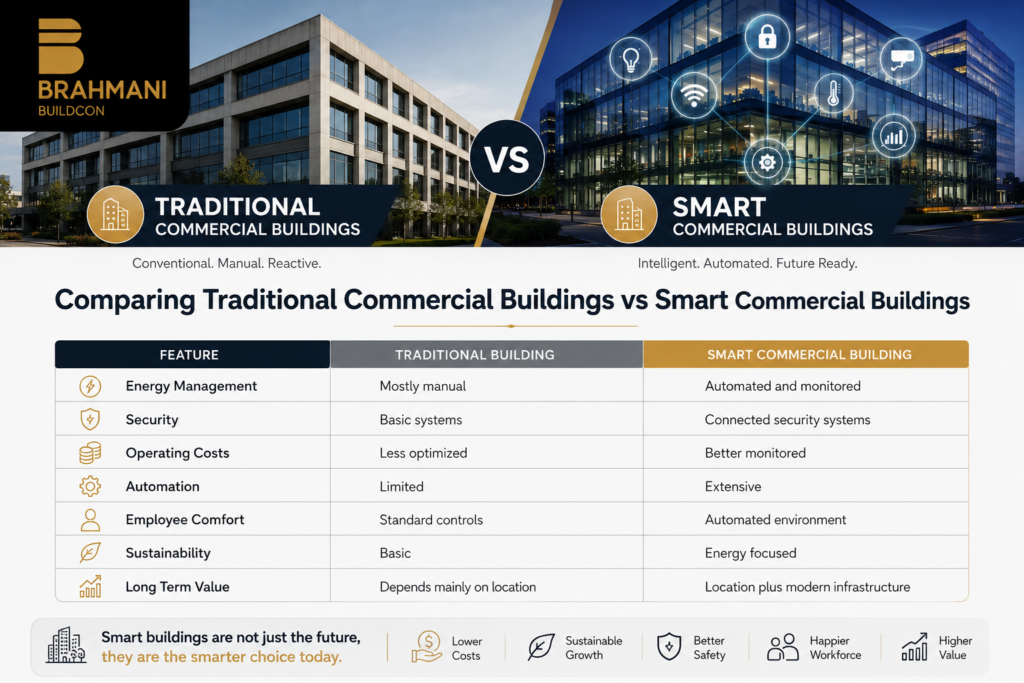
Traditional buildings often depend on manual controls. Smart buildings use automated systems and real time data to improve efficiency, comfort, and security.
Why Businesses Are Investing in Smart Infrastructure in 2026
Businesses are increasingly focused on reducing operating costs while creating better work environments. Smart infrastructure can support these goals and make commercial properties more adaptable.
Essential Smart Features Every Commercial Building Should Offer
Intelligent Building Management Systems (BMS)
A Building Management System can bring lighting, HVAC, security, and other systems into one platform. This makes monitoring and control easier.
Automated Lighting and Climate Control for Better Energy Efficiency
Motion sensors, timers, and automated temperature controls can reduce unnecessary energy use while keeping indoor spaces comfortable.
Smart Security with Access Control and 24/7 Surveillance
Modern access control, CCTV, alarms, and visitor monitoring can provide stronger protection for employees, customers, and property.
High Speed Digital Connectivity and Future Ready Network Infrastructure
Reliable internet and strong network infrastructure are essential for modern businesses. Buildings should be designed to support high speed connectivity and future technology upgrades.
Touchless Entry, Smart Parking, and Visitor Management Systems
Touchless access, digital visitor registration, and smart parking systems can make everyday building access faster and more convenient.
Real Time Energy Monitoring and Utility Optimization
Energy monitoring systems help businesses understand where electricity is being used. This information can help identify waste and improve efficiency.
EV Charging Stations and Sustainable Mobility Support
EV charging facilities can make commercial properties more convenient for employees, visitors, and customers while supporting cleaner transportation.
Smart Fire Detection and Emergency Response Systems
Advanced fire detection and emergency systems can provide faster alerts and improve safety during critical situations.
How Smart Buildings Improve Business Productivity and Employee Experience
Creating Comfortable and Efficient Work Environments
Better temperature, lighting, air quality, and building controls can create a more comfortable workplace.
Supporting Hybrid Work and Digital Collaboration
Strong connectivity and flexible infrastructure help businesses support video meetings, cloud applications, and hybrid working models.
Improving Employee Safety and Workplace Convenience
Smart access systems, visitor management, parking solutions, and security monitoring can make the workplace safer and easier to use.
Financial Benefits of Investing in a Smart Commercial Building
Lower Operating and Maintenance Costs
Automation can reduce unnecessary energy use and help building managers identify maintenance requirements earlier.
Higher Property Value and Long Term Appreciation
Properties with modern infrastructure can remain more attractive as business expectations and technology continue to evolve.
Better Tenant Retention and Rental Demand
Businesses often prefer commercial spaces that offer convenience, security, connectivity, and efficient operations.
Reduced Energy Consumption Through Automation
Automated lighting, cooling, and energy monitoring can help reduce avoidable consumption and support better resource management.
Questions Businesses Should Ask Before Choosing a Smart Commercial Property
Is the Building Ready for Future Technology Upgrades?
Check whether the building has flexible infrastructure that can support new technologies later.
How Secure Is the Building’s Digital Infrastructure?
Connected systems should have appropriate cybersecurity and access controls to protect building data and operations.
What Smart Systems Are Managed by the Developer?
Understand which systems are included in the property and which may require separate installation or management.
Are Maintenance and Operating Costs Transparent?
Ask about maintenance responsibilities, common area costs, utilities, and technology related expenses before investing.
Comparing Traditional Commercial Buildings vs Smart Commercial Buildings
Emerging Smart Building Trends Businesses Should Watch in the Next Five Years
AI Driven Building Automation
AI can help building systems understand usage patterns and automatically optimize energy, lighting, and climate controls.
Predictive Maintenance Using IoT Sensors
IoT sensors can monitor equipment and identify potential issues before they become major problems.
Net Zero and Green Commercial Buildings
Energy efficient designs, renewable energy, and sustainable materials are becoming increasingly important in commercial construction.
Smart Occupancy Analytics and Space Utilization
Occupancy data can help businesses understand how spaces are being used and plan layouts more efficiently.
Expert Tips for Selecting the Right Smart Commercial Building
Before choosing a commercial property:
• Check current and future technology readiness.
• Review cybersecurity measures for connected systems.
• Look for energy efficient infrastructure and relevant certifications.
• Understand maintenance responsibilities and costs.
• Consider accessibility, transport links, and nearby business hubs.
• Evaluate the quality and reputation of the developer or construction company in Ahmedabad Gujarat.
Frequently Asked Questions
What makes a commercial building “smart”?
A smart building uses connected technology, sensors, automation, and data to manage systems such as energy, security, lighting, climate, and access.
Are smart commercial buildings worth the investment?
They can be, especially for businesses looking for better efficiency, security, comfort, and long term property value.
Which smart features have the biggest impact on operating costs?
Energy monitoring, automated lighting, climate control, and efficient building management systems can have a significant impact.
How do smart buildings improve workplace security?
Access control, surveillance, visitor management, alarms, and connected security systems provide better monitoring and control.
Can small businesses also benefit from smart commercial spaces?
Yes. Even smaller businesses can benefit from reliable connectivity, automated controls, better security, and energy efficient infrastructure.
What certifications should businesses look for in smart commercial buildings?
Depending on the project, businesses can check for recognized green building and energy efficiency certifications, along with applicable local building standards.
Conclusion
Smart commercial buildings are becoming more than a luxury. They offer businesses a practical way to improve efficiency, security, comfort, sustainability, and long term value.
Before investing, look beyond the building’s appearance. Check its technology readiness, operating costs, connectivity, safety systems, and potential to support future business needs.
Looking for a Future Ready Commercial Space?
Whether you’re planning a corporate office, retail outlet, or mixed use commercial investment, Brahmani Buildcon develops commercial projects designed for modern businesses. Explore strategically located spaces with quality construction and future ready infrastructure to support long term growth.
 by
by