
Building your dream home or commercial property is one of the biggest investments you’ll ever make. Most people create a budget based on material prices, labour charges, and contractor estimates. However, what many don’t anticipate are the small construction mistakes that quietly increase costs throughout the project.
A delayed decision, choosing the wrong contractor, skipping soil testing, or making design changes midway can force you to spend lakhs more than originally planned. These aren’t always caused by rising market prices—they’re often avoidable mistakes that happen due to poor planning or lack of professional guidance.
Studies estimate that construction rework can account for 5–15% of a project’s total cost, making avoidable mistakes one of the biggest reasons budgets exceed initial estimates.
If you’re planning to build a home, office, or commercial space, understanding these common mistakes can help you stay within budget without compromising quality.
Whether you’re searching for reliable construction contractors in Ahmedabad or an experienced construction company in Ahmedabad, this guide will help you make smarter decisions before construction begins.
Table of Contents
Why Do Construction Costs Suddenly Increase?
Many property owners are surprised when their construction budget exceeds the original estimate. While inflation and material price fluctuations play a role, most budget overruns happen because of planning and execution mistakes.
In many projects, costs increase gradually rather than all at once. A few extra days of labour, repeated material purchases, unnecessary rework, and poor coordination between different vendors eventually add up to a significant amount.
Understanding where these hidden expenses come from is the first step toward avoiding them.
Are rising material prices the only reason?
No.
Material prices certainly fluctuate, but they are only one part of the equation.
Construction costs also increase because of:
- Frequent design modifications
- Poor contractor coordination
- Incorrect material estimation
- Project delays
- Labour downtime
- Rework due to mistakes
- Approval delays
- Emergency purchases at higher prices
Many homeowners blame market conditions when, in reality, better planning could have prevented much of the additional expense.
Which construction mistakes are completely avoidable?
Several costly mistakes can be prevented before construction even begins.
These include:
- Starting work without detailed planning
- Choosing contractors only based on the lowest quote
- Ignoring soil testing
- Using inferior materials
- Delaying important decisions
- Failing to monitor site progress
- Not keeping a contingency budget
Avoiding these mistakes can save both money and months of unnecessary stress.
1. Starting Construction Without Proper Planning
Excitement often pushes homeowners to begin construction quickly. Unfortunately, starting before everything is finalized usually creates expensive problems later.
Construction works best when every stage has already been planned—from drawings and approvals to procurement and scheduling.
What problems can poor planning create?
Poor planning often leads to:
- Constant interruptions during construction
- Material shortages
- Labour waiting for decisions
- Incorrect measurements
- Rework
- Budget overruns
- Delayed project completion
Many homeowners don’t realize that even a small delay can affect multiple activities happening on-site.
For example, if electrical layouts aren’t finalized before plastering, walls may need to be broken later—resulting in additional labour, materials, and finishing costs.
How can you avoid planning mistakes?
Before construction starts, ensure you have:
- Final architectural drawings
- Structural drawings
- Electrical and plumbing layouts
- Material selection
- Construction schedule
- Budget estimation
- Required approvals
Working with an experienced construction company in Ahmedabad helps coordinate these activities from day one, reducing costly surprises later.
2. Choosing the Cheapest Contractor Instead of the Right One
Price is important—but selecting a contractor based only on the lowest quotation can become one of the most expensive decisions during construction.
A significantly lower estimate often means something has been excluded, underestimated, or compromised.
Cheapest Contractor vs Experienced Construction Company
An experienced contractor focuses on long-term value rather than offering the lowest initial price.
A professional team usually provides:
- Better project planning
- Accurate cost estimation
- Skilled labour
- Quality supervision
- Reliable timelines
- Better vendor management
On the other hand, inexperienced contractors may struggle with coordination, causing delays and repeated work that ultimately increase overall costs.
What hidden costs can a low-price quote create?
Low quotations sometimes lead to:
- Additional charges later
- Poor workmanship
- Low-quality materials
- Frequent repairs
- Missed deadlines
- Labour replacement
- Unexpected variation costs
Many homeowners initially save a small amount but end up paying much more before the project is completed.
Instead of comparing only prices, compare experience, previous projects, quality standards, and transparency.
3. Making Design Changes After Construction Begins
Changing your mind during construction may seem harmless, but every modification affects multiple parts of the project.
A single design change can require demolition, fresh materials, additional labour, and schedule adjustments.
Why are design changes so expensive?
Design changes often affect:
- Structural work
- Plumbing lines
- Electrical wiring
- Flooring
- False ceilings
- Paintwork
- Interior layouts
Imagine shifting a staircase after construction begins. It’s not just about rebuilding the stairs—it may also require redesigning slabs, railings, electrical points, and surrounding walls.
This creates a chain reaction of additional costs.
How can you finalize designs before work starts?
Spend extra time during the planning stage.
Review:
- Floor plans
- Furniture layouts
- Kitchen design
- Bathroom fixtures
- Lighting
- Switch locations
- Window positions
- Storage spaces
Visualizing your home using 3D designs or detailed layouts can help identify changes before construction begins, when they’re far less expensive.
4. Using Low-Quality Materials to Save Money
Everyone wants to reduce construction costs, but compromising on material quality is rarely the right solution.
Low-quality materials may appear cheaper today but often result in expensive repairs, maintenance, or replacements within a few years.
Cheap Materials vs Quality Materials: Which saves more in the long run?
Quality materials generally offer:
- Longer life
- Better durability
- Lower maintenance
- Higher safety
- Improved structural performance
For example, investing in high-quality waterproofing materials can prevent recurring leakage issues that cost much more to fix later.
The same applies to cement, steel, pipes, electrical wiring, and waterproofing products.
What are the risks of poor-quality materials?
Inferior materials can lead to:
- Wall cracks
- Water leakage
- Dampness
- Rusting
- Structural weakness
- Frequent maintenance
- Reduced property value
Replacing hidden materials after construction is often far more expensive than choosing better products from the beginning.
5. Ignoring Soil Testing Before Construction
Many people assume every plot has suitable soil for construction.
Unfortunately, that’s not always true.
Different soil conditions require different foundation designs. Skipping soil testing may result in foundation problems that become extremely expensive to repair.
What can happen if soil testing is skipped?
Without proper soil investigation, you may face:
- Foundation settlement
- Uneven floors
- Wall cracks
- Structural instability
- Water drainage problems
- Increased repair costs
These issues may not appear immediately but can develop gradually over time.
How does soil testing save money?
A soil test helps engineers determine:
- Soil strength
- Foundation depth
- Safe load-bearing capacity
- Groundwater conditions
This allows the structure to be designed correctly from the start.
Rather than overspending on an unnecessarily heavy foundation—or risking an unsafe one—you invest only where it’s actually required.
6. Not Having a Realistic Construction Budget
One of the biggest reasons construction projects exceed their estimated cost is an unrealistic budget. Many homeowners calculate only the visible expenses like cement, steel, bricks, and labour, while overlooking several hidden costs that arise during the project.
When there’s no financial buffer, even a minor unexpected expense can slow down the project or force compromises on quality.
Expected Costs vs Hidden Construction Costs
Most people budget for:
- Construction materials
- Labour charges
- Contractor fees
However, they often forget expenses such as:
- Soil testing
- Government approvals and permits
- Temporary electricity and water connections
- Site preparation
- Material transportation
- Price fluctuations
- Waste disposal
- Finishing upgrades
- Landscaping and external development
These additional costs may seem small individually, but together they can significantly impact your overall budget.
How much of a contingency budget should you keep?
A good rule is to keep 10–15% of your total construction budget as a contingency fund.
This reserve helps cover:
- Unexpected repairs
- Material price increases
- Minor design improvements
- Weather-related delays
- Site-related challenges
A contingency budget doesn’t mean you plan to overspend—it means you’re prepared if unforeseen situations arise.
7. Poor Site Supervision
Even the best construction plan can fail without proper supervision. Construction involves multiple teams working simultaneously, and without regular monitoring, small mistakes often go unnoticed until they become expensive problems.
What construction problems happen without regular supervision?
Poor supervision can lead to:
- Incorrect measurements
- Poor workmanship
- Material wastage
- Safety issues
- Delayed timelines
- Rework due to installation errors
For example, if plumbing lines are installed incorrectly before flooring is completed, the finished floor may need to be broken to fix the issue. That means paying twice for labour and materials.
How does quality monitoring reduce rework?
Regular inspections help identify problems before they become costly.
A professional construction team checks:
- Structural accuracy
- Material quality
- Plumbing and electrical work
- Waterproofing
- Finishing quality
- Project progress
This proactive approach reduces rework, controls waste, and keeps the project moving according to schedule.
8. Delaying Material Procurement
Many homeowners postpone purchasing materials, hoping prices will decrease or because decisions haven’t been finalized. Unfortunately, last-minute procurement often leads to higher costs and unnecessary delays.
Buying Materials Early vs Last Minute
Planning material purchases in advance offers several advantages:
- Better price negotiations
- Wider product availability
- Reduced transportation costs
- Fewer project interruptions
- Better inventory management
Last-minute buying often forces you to purchase whatever is available, even if it’s more expensive or doesn’t meet your quality expectations.
How can procurement planning reduce expenses?
A procurement plan helps you:
- Order materials in phases
- Lock prices where possible
- Avoid emergency purchases
- Reduce storage issues
- Minimize material shortages
An experienced construction company in Ahmedabad usually prepares a procurement schedule before construction begins, ensuring materials arrive when they’re needed—not too early and not too late.
9. Ignoring Building Approvals and Regulations
Skipping approvals to save time can become one of the costliest mistakes during construction.
Legal compliance isn’t just paperwork—it’s essential for avoiding penalties, delays, and future legal complications.
What legal and financial risks can this create?
Ignoring approvals may result in:
- Government penalties
- Construction stoppage notices
- Demolition of unauthorized work
- Delay in utility connections
- Difficulty selling the property
- Problems obtaining occupancy certificates
Fixing legal issues after construction is usually far more expensive than obtaining approvals beforehand.
How can proper approvals prevent project delays?
When all permissions are secured before construction starts:
- Work progresses without interruptions.
- Inspections become smoother.
- Utility approvals are easier.
- Legal risks are minimized.
- Project timelines remain predictable.
Professional construction contractors in Ahmedabad understand local regulations and help ensure every stage complies with applicable requirements.
10. Hiring Different Vendors Instead of One Professional Construction Company
Some property owners believe hiring separate vendors for civil work, plumbing, electrical work, interiors, and finishing will reduce costs.
In reality, managing multiple contractors often creates coordination problems that increase both expenses and delays.
Multiple Contractors vs Turnkey Construction
With multiple vendors, homeowners are responsible for:
- Scheduling work
- Resolving disputes
- Coordinating timelines
- Managing material deliveries
- Monitoring quality
- Handling payment schedules
When one contractor is delayed, every other activity is affected.
In a turnkey construction model, a single company manages the complete project—from planning and procurement to execution and quality control—providing better accountability and smoother coordination.
Which approach offers better cost control?
A professional construction company offers:
- Single point of responsibility
- Better budget management
- Coordinated project scheduling
- Consistent quality standards
- Reduced communication gaps
- Faster project completion
Instead of solving problems between multiple vendors, you receive a streamlined construction process with better cost visibility.
Top Warning Signs That Your Construction Budget Is Going Off Track
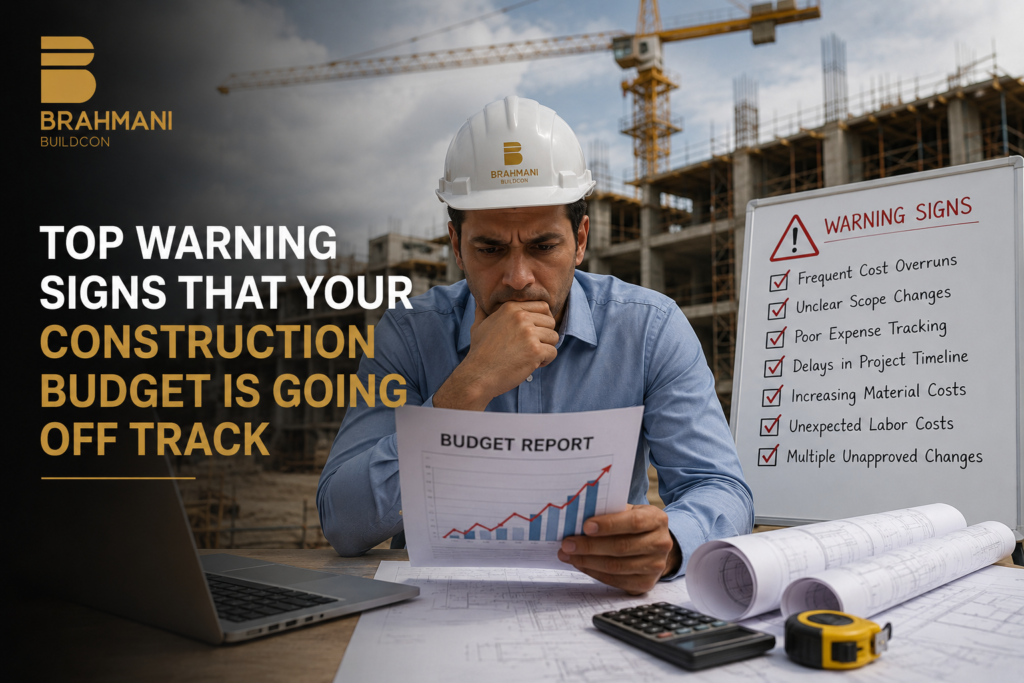
Construction projects rarely exceed the budget overnight. There are usually early warning signs that indicate expenses are starting to spiral.
Watch for these red flags:
- Frequent design changes leading to repeated rework.
- Repeated material shortages causing labour delays.
- Constant project delays extending labour and equipment costs.
- Labour idle time because materials or drawings aren’t ready.
- Budget revisions every month with no clear explanation.
- Lack of site supervision resulting in mistakes and material wastage.
Recognizing these issues early allows you to take corrective action before they become major financial setbacks.
Comparison Table – Smart Decisions vs Costly Mistakes
| Smart Decision | Costly Mistake |
| Complete planning before construction | Starting without a plan |
| Experienced contractor | Lowest-price contractor |
| Quality materials | Cheap materials |
| Soil testing | No soil investigation |
| Fixed design | Frequent design changes |
| Regular supervision | Poor monitoring |
| Planned procurement | Last-minute purchases |
Construction Cost-Saving Checklist
Use this checklist before starting your project:
- Finalize architectural and structural drawings.
- Complete soil testing before foundation work.
- Select an experienced contractor based on quality, not just price.
- Prepare a detailed construction budget.
- Keep a contingency fund of 10–15%.
- Finalize designs before construction starts.
- Choose quality construction materials.
- Create a material procurement schedule.
- Obtain all required approvals before work begins.
- Conduct regular site inspections throughout the project.
Following this checklist can help reduce unnecessary expenses while improving construction quality and project timelines.
Frequently Asked Questions
What is the biggest construction mistake homeowners make?
Starting construction without proper planning is one of the most common mistakes. Incomplete drawings, unclear budgets, and last-minute decisions often lead to delays, rework, and higher overall costs.
How can I reduce construction costs without affecting quality?
Focus on complete planning, hire experienced professionals, finalize designs early, use quality materials, and monitor construction regularly. Preventing mistakes is far more cost-effective than fixing them later.
Is hiring the cheapest contractor a good idea?
Not always. A low quote may exclude important work, use lower-quality materials, or result in poor workmanship that increases expenses over time. Choosing experienced construction contractors in Ahmedabad based on quality, transparency, and expertise often delivers better long-term value.
Why is soil testing important before construction?
Soil testing helps determine the right foundation design based on the ground conditions. It reduces the risk of settlement, structural damage, and costly repairs in the future.
How much extra budget should I keep?
Most experts recommend setting aside 10–15% of your total construction budget as a contingency fund to cover unexpected expenses and market fluctuations.
Can poor planning delay a construction project?
Yes. Poor planning often causes material shortages, labour downtime, approval delays, and repeated design changes, all of which extend the project timeline and increase overall costs.
Conclusion
Construction costs don’t increase because of one major mistake—they rise because of several small decisions that seem harmless at the time. Skipping planning, choosing the cheapest contractor, delaying approvals, ignoring soil testing, or making frequent design changes can quietly add significant costs to your project.
The good news is that these mistakes are largely preventable. With detailed planning, quality materials, professional supervision, and the right construction partner, you can complete your project on time, within budget, and without compromising on quality.
If you’re looking for trusted construction contractors in Ahmedabad or a reliable construction company in Ahmedabad, Brahmani Buildcon offers end-to-end construction solutions with a focus on transparent planning, quality execution, and efficient cost management. Contact Brahmani Buildcon today to build smarter, avoid costly mistakes, and turn your vision into a successful project.
 by
by