
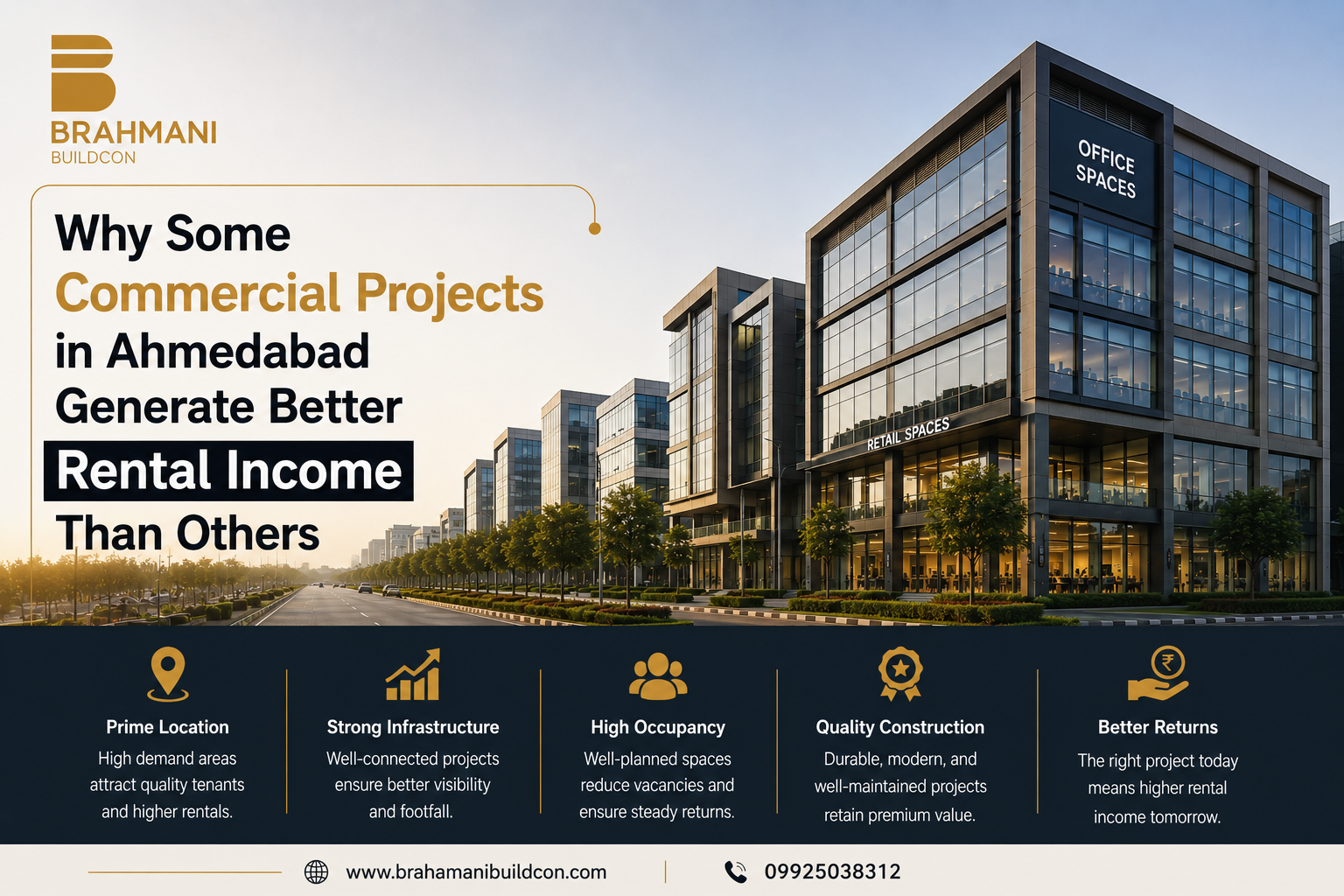
Not all commercial projects in Ahmedabad generate the same rental income. Factors such as location, tenant demand, accessibility, infrastructure, and occupancy levels play a much bigger role than the purchase price alone. Choosing the right commercial project can help you achieve stable rental returns and long-term capital appreciation.
Content Overview
Why Do Some Commercial Properties Stay Occupied While Others Remain Vacant?
A commercial property’s rental success depends on its ability to attract and retain businesses. While some projects enjoy consistent occupancy because of strong demand and a strategic location, others struggle with vacant units due to poor planning, limited accessibility, or weak commercial activity.
This trend is reflected across the broader commercial real estate market as well. According to JLL, India’s office market recorded a historic 83.3 million sq. ft. of gross leasing activity in 2025, while vacancy declined to 15.2% the lowest level in five years. This indicates that well-located commercial properties continue to attract strong tenant demand, while less competitive locations may face longer vacancy periods.
Is Rental Income Driven by Price or by Tenant Demand?
Many investors assume that buying a lower-priced commercial unit automatically leads to better returns. However, rental income is determined by how attractive the property is to tenants, making demand far more important than the initial purchase cost.
Cheap Property vs. High-Demand Property
A lower-priced commercial property may seem like a smart investment initially, but affordability alone doesn’t guarantee rental success. Businesses typically prefer locations that offer better visibility, customer footfall, parking, and accessibility, even if rental costs are higher. As a result, commercial projects in Ahmedabad located in high-demand business zones often experience lower vacancy rates, attract stronger tenants, and provide more stable rental income.
Why Lower Prices Don’t Always Mean Better Returns
Buying a commercial unit at a lower price can sometimes lead to higher holding costs if the property remains vacant for extended periods. Investors may need to reduce rent, spend more on marketing, or frequently search for new tenants, which affects overall profitability. In contrast, a well-located commercial property with strong tenant demand is more likely to secure long-term lease agreements and consistent occupancy. Instead of evaluating only the purchase price, investors should consider the property’s ability to generate reliable rental income over the years.
7 Factors That Decide Rental Income in Commercial Projects
Consistent rental income doesn’t happen by chance. It is influenced by several practical factors that determine whether businesses see value in leasing a space. Evaluating these factors before investing can help you make a more profitable decision.
- Location
- Footfall
- Visibility
- Parking
- Accessibility
- Tenant Mix
- Infrastructure
What Kind of Businesses Are Most Likely to Rent This Property?
One of the most overlooked aspects of commercial property investment is understanding your future tenant. Different businesses have different location requirements, and identifying the right tenant profile can significantly improve occupancy and rental stability.
Cover:
- Retail brands
- Cafés
- Clinics
- Banks
- Corporate offices
- Co-working spaces
Most investors evaluate the building but rarely think about which businesses would actually choose to operate there.
A Busy Building Doesn’t Always Mean Higher Rental Income Here’s Why
A commercial complex may appear crowded, but appearances can be misleading. Frequent tenant turnover, weak purchasing power, or short lease agreements can reduce rental income even in properties that seem busy.
Explain:
- Wrong tenant mix
- Low purchasing power
- Short lease periods
- High vacancy turnover
Commercial Project Comparison: High Rental Yield vs. Low Rental Yield
Comparing successful commercial projects with underperforming ones helps investors identify the features that support consistent rental income. Small differences in location, accessibility, and tenant quality often have a significant impact on long-term returns.
| High Rental Income | Low Rental Income |
| Strong footfall | Poor visibility |
| Good parking | Limited parking |
| Mixed-use surroundings | Isolated location |
| Premium tenants | Frequent tenant turnover |
| Metro/highway connectivity | Weak connectivity |
Hidden Warning Signs That Can Reduce Rental Income
Before investing, it’s important to identify warning signs that may affect future occupancy and rental returns. Ignoring these issues can lead to longer vacancy periods and lower overall profitability.
Examples:
- Too many vacant units
- Low visitor traffic
- Weak surrounding infrastructure
- Oversupply of commercial spaces
- Poor property maintenance
Questions Every Investor Should Ask Before Buying for Rental Income
The right questions can reveal whether a commercial project has strong rental potential or hidden risks. Asking these before making a purchase helps you make a more informed investment decision.
Examples:
- What is the current occupancy rate?
- Who are the existing tenants?
- What businesses are performing well here?
- How many units are vacant?
- What is the average lease duration?
- Is future infrastructure expected nearby?
Can Upcoming Infrastructure Increase Rental Income?
Infrastructure developments often influence where businesses choose to establish themselves. Projects located near upcoming transport links and business hubs typically experience stronger tenant demand and better rental growth over time.
Talk about:
- Metro
- Ring roads
- Business districts
- IT parks
- New residential developments
Biggest Rental Income Mistakes Investors Make
Many rental income challenges can be avoided by making informed decisions during the buying stage. Understanding these common mistakes helps investors reduce risk and improve long-term returns.
- Buying only because of a low price
- Ignoring tenant demand
- Not checking parking
- Ignoring future competition
- Choosing the wrong unit size
If You Were the Tenant, Would You Rent This Commercial Space?
Before investing, take a step back and evaluate the property from a tenant’s perspective. If the space doesn’t meet the practical needs of a business, attracting long-term tenants may become difficult regardless of the purchase price.
Ask yourself:
- Is it easy to find?
- Is parking convenient?
- Would customers visit this location regularly?
- Is public transport easily accessible?
- Would your business benefit from this location?
- Are nearby businesses complementary or competing?
Conclusion
Generating strong rental income isn’t simply about buying commercial space at the lowest price, it’s about investing in a location that businesses want to occupy today and in the future. By evaluating tenant demand, accessibility, infrastructure, occupancy levels, and long-term growth potential, investors can make more informed decisions and reduce vacancy risks.
If you’re exploring commercial projects in Ahmedabad, partnering with an experienced developer can make a significant difference. Brahmani Buildcon focuses on developing commercial spaces that prioritize strategic locations, business-friendly infrastructure, and long-term investment value, helping investors build sustainable rental income opportunities.
 by
by