
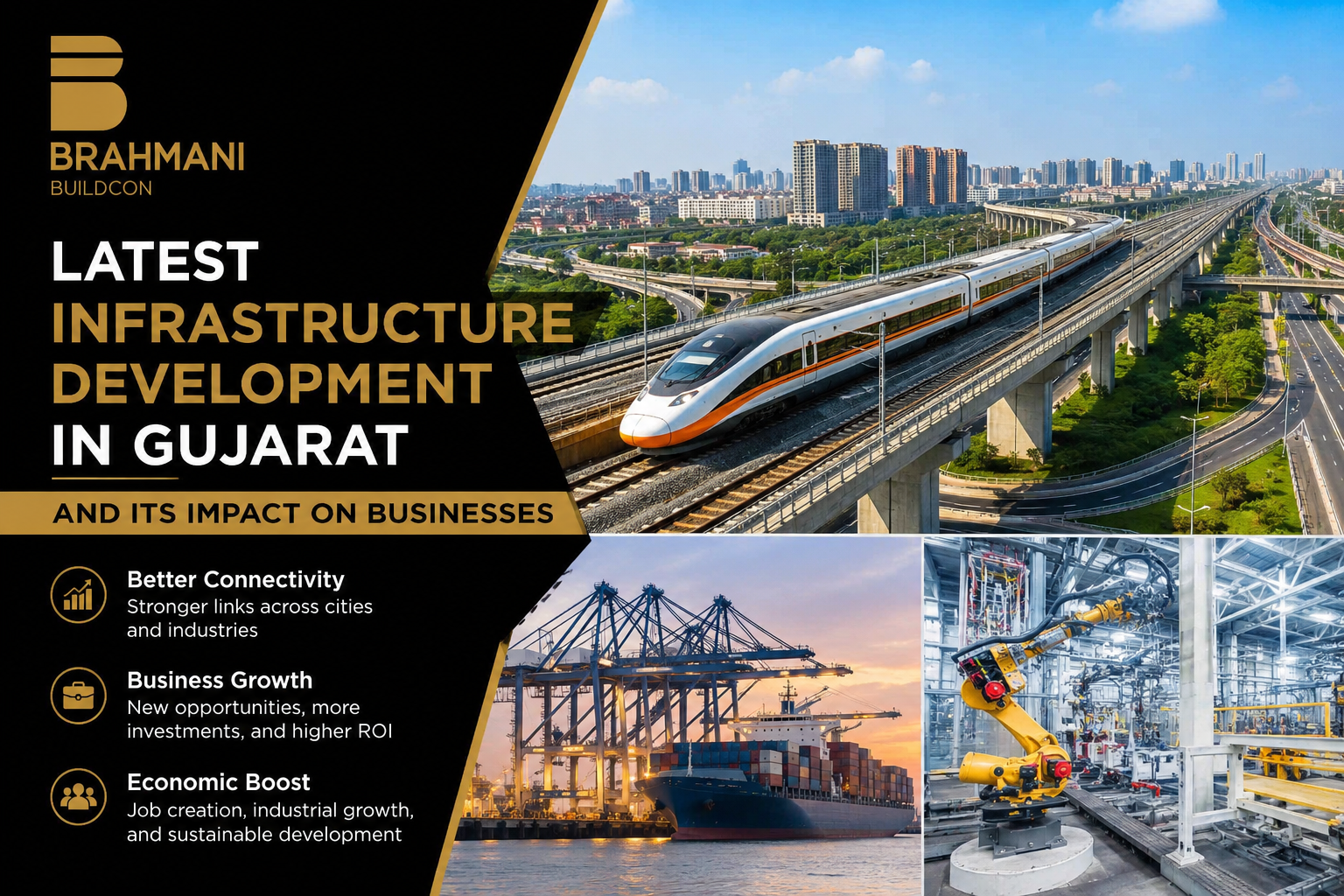
Gujarat has built a strong reputation as one of India’s most business friendly states. Its industrial base, ports, highways, airports, urban centres and planned business districts have helped the state attract companies from many sectors.
In 2026, this growth is becoming even more visible. New expressways, metro extensions, railway projects, industrial corridors, semiconductor facilities and maritime infrastructure are improving how people, products and businesses move across the state.
For businesses, infrastructure is not simply about better roads or faster transport. It can influence where companies open offices, where manufacturers set up plants, where warehouses are built and where commercial property demand grows.
For example, the Ahmedabad Dholera Expressway is strengthening connectivity with Dholera Special Investment Region, while the Ahmedabad Dholera semi high speed railway project is planned to improve links between Ahmedabad, Dholera, the upcoming Dholera Airport and Lothal.
This guide looks at the latest infrastructure development in Gujarat and explains how these changes can create opportunities for businesses, investors and commercial real estate.
Why Gujarat Is Emerging as One of India’s Fastest Growing Infrastructure Hubs
The State’s Vision for Economic and Industrial Growth
Gujarat has long focused on building infrastructure around trade, manufacturing, finance and industrial development.
The state’s geographical position also gives it an advantage. Gujarat has a long coastline, major ports, established industrial centres and strong road and rail connections with other parts of India.
The development of planned economic zones is adding another layer to this ecosystem. Dholera Special Investment Region, for example, has been planned as a greenfield industrial smart city with a focus on sectors such as defence, aviation, high technology and pharmaceuticals.
Gujarat is also becoming important for advanced manufacturing. In April 2026, the government notified a semiconductor related SEZ at Dholera for Tata Semiconductor Manufacturing. The facility is expected to support electronic hardware, software and IT enabled services and is projected to create around 21,000 jobs.
This type of development shows how infrastructure and industrial investment can grow together.
How Infrastructure Drives Business Expansion and Investment
A business needs more than a good building to grow.
It needs:
- Easy access to customers
- Reliable transportation
- Efficient logistics
- Skilled employees
- Stable utilities
- Suitable commercial and industrial spaces
- Strong digital connectivity
When these elements come together, a location becomes more attractive for business investment.
This is one reason infrastructure development can influence commercial property demand. Companies often prefer locations where future connectivity is already planned or where major infrastructure is being developed.
For businesses searching for an experienced infrastructure company in Ahmedabad, understanding these wider development patterns can also help when planning future commercial projects.
Major Infrastructure Projects Transforming Gujarat in 2026
Expansion of Expressways and National Highways
The Ahmedabad Dholera Expressway is a major example of this infrastructure push. The expressway spans 109.019 km and was developed at a cost of ₹5,800 crore. It has reduced the travel time between Ahmedabad and Dholera to around 45 minutes.
Road connectivity remains one of the biggest drivers of Gujarat’s economic growth.
One important project is the Ahmedabad Dholera Greenfield Expressway. The 109.019 kilometre expressway connects the Ahmedabad and Dholera region and provides access towards Dholera Special Investment Region and the coastal highway. The project has a reported cost of ₹5,800 crore and was opened for public testing in February 2026.
This type of connectivity can have a direct impact on industrial development.
Better road access can help businesses move raw materials, finished products, machinery and employees more efficiently. It can also make developing areas more attractive for warehouses, manufacturing facilities and commercial projects.
The wider Delhi Mumbai Expressway network is also strengthening long distance connectivity. A major eight lane extradosed cable-stayed bridge over the Narmada River was completed in March 2026 as part of this corridor.
Metro Rail Development Across Key Cities
Urban transportation is another major part of Gujarat’s infrastructure story.
Ahmedabad and Gandhinagar are benefiting from the expanding metro network. In February 2026, the Union Cabinet approved a 3.33 kilometre extension from GIFT City to Shahpur with three elevated stations. The project has an estimated cost of ₹1,067.35 crore and is expected to strengthen connectivity between Ahmedabad and the GIFT region.
In June 2026, another important metro project was approved. Ahmedabad Metro Phase 2A will cover 6.032 kilometres with five stations, connecting Koteshwar Road towards the airport corridor. Once operational, Ahmedabad and Gandhinagar are expected to have 77.63 kilometres of active metro rail network.
Better public transportation can influence commercial development because businesses become easier to access for employees, customers and visitors.
Growth of GIFT City as a Global Business Destination
GIFT City has become one of Gujarat’s most visible examples of planned modern infrastructure.
Located between Ahmedabad and Gandhinagar, GIFT City is designed as an international financial and technology hub. Its ecosystem includes financial services, banking, fintech, IT and IT enabled services, insurance, capital markets and other business sectors.
The official GIFT City website currently reports more than 29 million square feet allotted, over 1,000 operational entities and more than 20,000 employment opportunities.
Its infrastructure includes smart water systems, power infrastructure, a city command and control centre, utility tunnels, district cooling and automated waste management.
For businesses, GIFT City demonstrates how planned infrastructure can create an entire commercial ecosystem rather than simply developing individual buildings.
Port and Logistics Infrastructure Enhancing Trade
Gujarat’s coastline gives it a major advantage for domestic and international trade.
Ports support industries that depend on the movement of raw materials and finished goods. Better connections between ports, industrial areas, roads and railways can reduce logistical challenges for manufacturers and exporters.
Maritime infrastructure is also expanding into new areas. In July 2026, the Ministry of Ports, Shipping and Waterways gave in principle approval for a greenfield shipbuilding cluster in Porbandar district. The proposed cluster covers nearly 2,000 acres and is planned to include shipyards, supporting manufacturing units, common infrastructure and capability development centres.
A ₹1,570 crore ship repair facility at Vadinar has also received approval under the Shipbuilding Development Scheme.
These projects can create opportunities for engineering companies, logistics providers, suppliers, contractors and supporting businesses.
Industrial Corridors and Manufacturing Zones
Gujarat is also gaining from the development of industrial corridors and planned manufacturing zones.
Dholera is particularly important in this area. The government describes Dholera Special Investment Region as a greenfield industrial smart city with large land parcels and infrastructure designed for major industrial investment.
The development of semiconductor manufacturing in Dholera adds another important dimension.
In May 2026, the Union Cabinet also approved two semiconductor manufacturing projects in Gujarat with a combined investment of around ₹3,936 crore and expected employment for approximately 2,230 skilled professionals.
This growing manufacturing ecosystem can create demand for industrial buildings, offices, warehouses, worker facilities and supporting commercial services.
How Infrastructure Development Is Changing the Business Landscape
Faster Transportation and Improved Supply Chain Efficiency
Time is a major business cost.
When roads, railways and logistics networks improve, companies can move goods more efficiently. This can be especially important for manufacturing and distribution businesses.
A manufacturer located close to a major highway may find it easier to receive raw materials and send finished products to different markets.
Similarly, warehouses located near major transport corridors can become valuable because they can support faster distribution.
Better Connectivity for Commercial and Industrial Businesses
Connectivity can influence both employee experience and business operations.
A commercial building near a metro station may be easier for employees to reach. An industrial facility near a highway may have better access to suppliers and customers.
This is why businesses should not evaluate property only by its current location. They should also consider how the surrounding infrastructure may develop over the next five to ten years.
Increased Demand for Office and Commercial Spaces
Infrastructure development often creates new business clusters.
When a major transport project improves access to an area, more companies may consider setting up there. This can increase demand for:
- Corporate offices
- Retail spaces
- Business centres
- Warehouses
- Hotels
- Restaurants
- Service businesses
GIFT City is a strong example of this ecosystem effect, with financial, technology and supporting businesses operating within an integrated development.
New Opportunities for SMEs, Startups, and Large Enterprises
Infrastructure growth does not benefit only large corporations.
Small and medium businesses can also benefit from new economic activity.
A new industrial zone can create demand for maintenance companies, transport providers, food services, equipment suppliers, professional services and construction businesses.
For startups, growing commercial districts can provide access to customers, employees, suppliers and business networks.
Industries Benefiting the Most from Gujarat’s Infrastructure Growth
Manufacturing and Engineering
Manufacturing is one of the biggest beneficiaries of infrastructure investment.
Better roads, railways, industrial zones and logistics networks make it easier for factories to manage supply chains.
The growth of Dholera and semiconductor manufacturing could further increase demand for engineering, equipment, construction and supporting industrial services.
Logistics and Warehousing
Logistics companies depend heavily on connectivity.
Highways, freight routes, ports and industrial corridors can create strong opportunities for warehouses and distribution centres.
As Gujarat’s manufacturing base expands, businesses may increasingly look for strategically located logistics facilities.
Information Technology and IT Parks
Technology businesses often prefer locations with reliable digital infrastructure, modern offices and access to skilled talent.
GIFT City is already positioned as a financial and technology hub and includes IT, fintech and IT enabled services among its target sectors.
Commercial Real Estate and Retail
Commercial real estate can benefit when new infrastructure brings more businesses and people into an area.
Office buildings, retail spaces, restaurants, hotels and service businesses may all benefit from increased footfall and improved accessibility.
However, investors should study actual demand rather than assuming that every infrastructure project will immediately increase property values.
Hospitality and Tourism
Better highways, airports and rail connectivity can make tourist destinations and business centres easier to access.
The Mumbai Ahmedabad High Speed Rail project is another major development connecting important cities across Gujarat and Maharashtra. The planned 508 kilometre corridor includes Ahmedabad, Anand, Vadodara, Bharuch, Surat and other major locations.
Improved intercity connectivity can support business travel, tourism and hospitality demand.
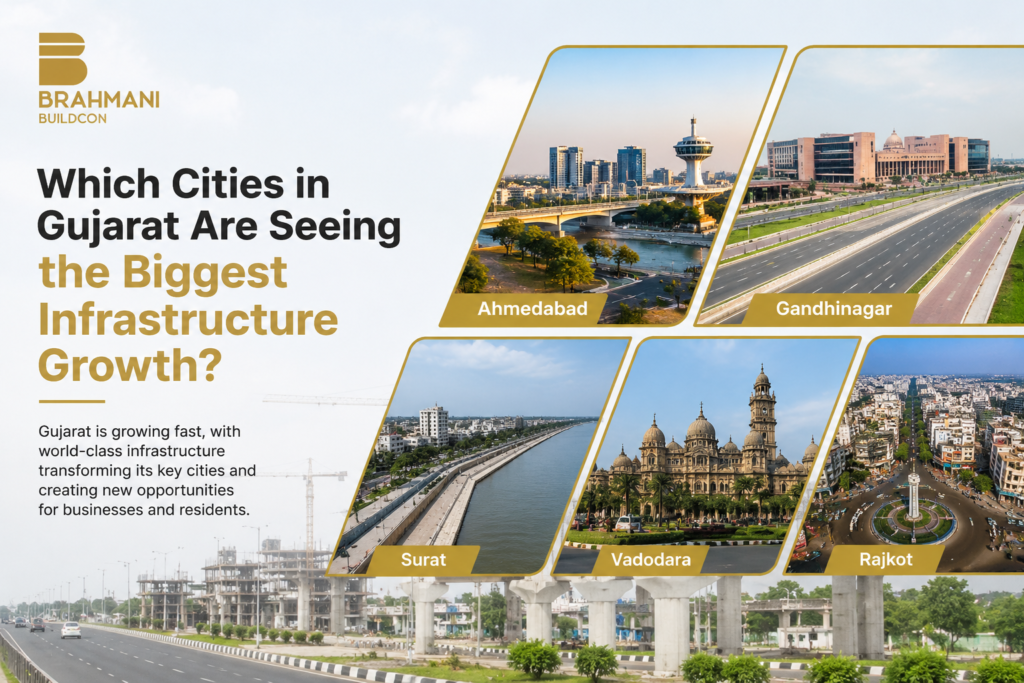
Which Cities in Gujarat Are Seeing the Biggest Infrastructure Growth?
Ahmedabad
Ahmedabad remains one of Gujarat’s most important commercial centres.
The city is benefiting from metro expansion, highway connectivity, links towards Dholera and improved connections with GIFT City.
The Ahmedabad Dholera Expressway and proposed Ahmedabad Dholera railway connection could further strengthen the city’s role as a gateway to emerging industrial areas.
For businesses, Ahmedabad offers a combination of established commercial activity and access to emerging growth corridors.
Gandhinagar
Gandhinagar benefits from its proximity to Ahmedabad and GIFT City.
The metro network is improving connectivity across the region, while GIFT City is creating a major financial and technology ecosystem nearby.
This makes the Ahmedabad Gandhinagar region particularly attractive for businesses looking for office, technology and professional service opportunities.
Surat
Surat is one of Gujarat’s strongest business and manufacturing centres, particularly known for textiles, diamonds, engineering and trade.
The Mumbai Ahmedabad High Speed Rail corridor includes Surat, creating another important connectivity link between the city and major economic centres.
As transportation infrastructure improves, businesses can benefit from better access to markets, talent and regional business networks.
Vadodara
Vadodara has a strong industrial and engineering base.
Its location between Ahmedabad and Surat also gives it strategic value within Gujarat’s wider economic network.
The city is included in the Mumbai Ahmedabad High Speed Rail corridor, while the wider industrial corridor ecosystem also supports manufacturing activity in the region.
Rajkot
Rajkot is an important engineering and manufacturing centre in Saurashtra.
Its industrial ecosystem supports sectors such as engineering, auto components, machinery and manufacturing.
Railway connectivity improvements in the region are also part of Gujarat’s broader infrastructure expansion. Recent railway information lists the Rajkot Kanalus doubling project among works aimed at improving connectivity in the state.
How Businesses Can Take Advantage of Gujarat’s Infrastructure Expansion
Choosing Locations with High Future Growth Potential
A business location should be evaluated for both present and future value.
Before selecting a property, consider:
- Upcoming highways
- Metro routes
- Railway projects
- Industrial parks
- Airport connectivity
- Planned commercial development
- Nearby residential growth
A location that appears slightly outside the main business district today could become strategically important after major infrastructure is completed.
Investing Near Emerging Commercial and Industrial Corridors
Businesses should study the relationship between infrastructure and economic activity.
A new road alone may not create a successful business location. The strongest opportunities often appear where transportation infrastructure connects with employment, industry, housing and commercial development.
Dholera is an example where transport infrastructure and industrial development are progressing together. The Ahmedabad Dholera Expressway, planned railway connection and industrial development are creating a broader growth ecosystem.
Planning Business Expansion Around Upcoming Infrastructure Projects
Businesses planning expansion should look beyond current traffic and property prices.
For example, a company may compare two locations:
Location A may have strong activity today but limited scope for expansion.
Location B may have lower current activity but major highway, metro, industrial or commercial projects planned nearby.
The second location could offer stronger long term potential, provided the planned infrastructure is credible and the surrounding development supports actual business demand.
Key Factors Businesses Should Evaluate Before Investing in Growing Infrastructure Zones
Connectivity and Accessibility
Check how easily employees, customers, suppliers and vehicles can reach the location.
Look at roads, public transportation, highways, airports and railway access.
Availability of Skilled Workforce
A good location should also provide access to people.
Businesses should consider nearby residential areas, educational institutions and existing employment centres when evaluating a new location.
Commercial Property and Land Availability
Infrastructure can increase demand for commercial and industrial property.
Before investing, businesses should evaluate land availability, building regulations, development potential, rental demand and future competition.
Government Policies and Incentives
Government policies can influence the attractiveness of industrial and commercial zones.
Businesses should review applicable incentives, approvals, zoning requirements and development policies before making investment decisions.
GIFT City, for example, offers a business focused ecosystem with incentives and dedicated infrastructure for several financial and technology sectors.
Infrastructure Trends That Will Shape Gujarat’s Business Future
Smart Cities and Digital Infrastructure
Modern infrastructure is becoming increasingly connected.
Future commercial developments are likely to use smart monitoring, digital security, intelligent transportation systems, energy management and connected building systems.
GIFT City already uses several technology driven infrastructure systems, including a city command and control centre and smart water infrastructure.
Green Infrastructure and Sustainable Development
Sustainability is becoming an important part of infrastructure planning.
Businesses are increasingly looking for buildings that reduce energy consumption, use resources efficiently and provide better working environments.
Future commercial developments will likely place greater importance on energy efficient buildings, renewable energy, water management and sustainable construction.
Multimodal Logistics and Freight Connectivity
The future of logistics is not based on one transportation method.
Roads, railways, ports and airports need to work together.
Gujarat’s planned Ahmedabad Dholera railway project is an example of this approach. The project is designed to connect Ahmedabad with Dholera SIR, the upcoming Dholera Airport and Lothal, creating stronger passenger and freight connectivity.
AI and Smart Technology in Urban Development
Artificial intelligence can increasingly support traffic management, energy use, security, predictive maintenance and urban planning.
For businesses, this can mean smarter buildings and more efficient infrastructure.
As cities become more connected, commercial construction will also need to adapt to changing technology requirements.
Common Mistakes Businesses Make When Choosing Expansion Locations
Investing Without Studying Future Infrastructure Plans
A location should not be selected only because it looks attractive today.
Businesses should research approved and officially announced infrastructure projects before making major investments.
Ignoring Logistics and Connectivity
A beautiful commercial property can still be a poor business choice if customers, employees and suppliers struggle to reach it.
Accessibility should always be part of the location evaluation process.
Focusing Only on Current Property Prices
A low property price does not automatically mean a good investment.
Businesses should consider total operating costs, future connectivity, demand, workforce availability and development potential.
Overlooking Government Development Plans
Master plans, industrial policies and infrastructure announcements can provide important clues about future growth.
Businesses that study these plans early may be better positioned to identify emerging opportunities.
Expert Tips for Businesses Planning to Expand in Gujarat
Businesses planning expansion can follow a simple approach.
- Monitor upcoming infrastructure announcements from official government sources.
- Study long term connectivity instead of focusing only on current convenience.
- Compare multiple locations before making a property decision.
- Look for areas where infrastructure is supported by genuine business and employment growth.
- Evaluate future commercial and industrial development around the property.
- Consider how easily the building can adapt to future business requirements.
- Work with experienced construction and development partners who understand local conditions.
For companies planning commercial development in Ahmedabad, working with an experienced infrastructure company in Ahmedabad can also help turn location and infrastructure opportunities into practical development plans.
Frequently Asked Questions
How is infrastructure development helping businesses in Gujarat?
Infrastructure development is improving transportation, logistics, connectivity and access to emerging business districts. This can help companies reduce travel and logistics challenges while creating new opportunities for commercial and industrial development.
Which Gujarat city offers the best opportunities for business expansion?
There is no single best city for every business. Ahmedabad is strong for commercial activity and connectivity, Gandhinagar and GIFT City are attractive for finance and technology, Surat is strong in manufacturing and trade, Vadodara has a strong industrial base and Rajkot is an important engineering and manufacturing centre.
Why does infrastructure increase commercial property value?
Improved infrastructure can make an area easier to access and more attractive to businesses, employees and customers. When demand for commercial space increases, property values and rental demand may also benefit. However, actual impact depends on local supply, demand and economic activity.
How do new highways and metro projects benefit businesses?
Highways can improve movement of goods and vehicles, while metro systems can make commercial areas easier for employees and customers to reach. Together, they can improve accessibility and support business activity.
Which industries are growing the fastest because of Gujarat’s infrastructure development?
Manufacturing, engineering, logistics, warehousing, technology, financial services, commercial real estate and supporting services are among the sectors benefiting from Gujarat’s infrastructure expansion. Semiconductor and advanced manufacturing are also becoming increasingly important in areas such as Dholera.
How can businesses identify high growth investment locations?
Businesses should study approved infrastructure projects, transport connectivity, industrial development, workforce availability, property supply and government plans. It is better to evaluate the complete growth ecosystem rather than focusing on one upcoming project.
Conclusion
Gujarat’s infrastructure development is moving beyond traditional roads and highways. The state is building a connected ecosystem that combines expressways, metro networks, railways, airports, ports, industrial zones, smart cities and technology driven commercial districts.
Projects such as the Ahmedabad Dholera Expressway, Ahmedabad Dholera railway connection, Ahmedabad Metro expansion, GIFT City development and semiconductor manufacturing in Dholera show how infrastructure is closely connected with business growth.
For businesses, the biggest opportunity may not always be in areas that are already developed. Emerging locations with strong infrastructure plans can create new possibilities for offices, industrial facilities, warehouses, retail spaces and other commercial developments.
The key is to think beyond today’s market.
By studying future connectivity, infrastructure plans, workforce availability and commercial demand, businesses can make more informed expansion decisions.
For organisations planning commercial and infrastructure development in Ahmedabad, Brahmani Buildcon can be a valuable partner for understanding the local development environment and planning projects that are built around long term business needs.
Gujarat’s infrastructure story is still developing, and businesses that plan with this changing landscape in mind can be better prepared for the opportunities ahead.
 by
by