
Building a home is not just a construction project. For most families, it’s an emotional milestone. It’s where your mornings begin, where your kids grow up, and where your future memories are created. That’s why, before cement, bricks, and RCC work even start, many homeowners first ask one common question:
“Vastu follow karna zaroori hai kya?”
The answer is simple: Vastu is not compulsory, but if you’re already investing a lifetime’s savings into a home, it makes sense to plan it smartly. Vastu doesn’t mean superstition. It’s basically a set of traditional planning principles that focus on direction, light, ventilation, and energy flow.
In cities like Ahmedabad, where plots are often compact, road-facing, or corner-based, vastu planning becomes even more important. And if you want a home that feels peaceful, practical, and future-ready, vastu guidance can really help.
This blog will give you a simple, easy-to-follow vastu guide for home construction. No complicated words. No confusion. Just clear tips that you can use while finalizing your home plan.
Why Vastu Is Important During Home Construction
Many people believe vastu is only for temples or pooja rooms. But vastu is actually about the entire layout.
If your kitchen is in the wrong zone, it can create daily discomfort. If your toilet is placed in the wrong corner, it can affect hygiene and energy balance. If your home has no proper ventilation due to poor planning, your home will feel suffocating even if the interior looks expensive.
A lot of vastu rules were designed based on nature. For example, the east direction gets morning sunlight, so vastu recommends keeping important living areas in that zone.
Also, from a resale point of view, vastu matters. Today, many buyers ask for vastu-compliant homes before purchasing. Some real estate studies suggest that more than 70% of Indian buyers check vastu before buying a property, especially in residential cities.
So yes, vastu is not compulsory, but it is definitely useful.
Content Overview
Best Vastu Direction Basics (Quick Guide)
Before we go into specific rooms, you should understand the basics of directions. Because vastu works like a map. Once you understand the map, everything becomes easier.
North, East, West, South Meaning
Each direction is linked with a certain energy:
North is considered the zone of wealth and career growth.
East represents sunrise, health, and positivity.
West is linked with stability and long-term progress.
South is powerful but needs correct planning, otherwise it can create imbalance.
In simple words, vastu believes that:
- North and East should be lighter and more open
- South and West should be heavier and more stable
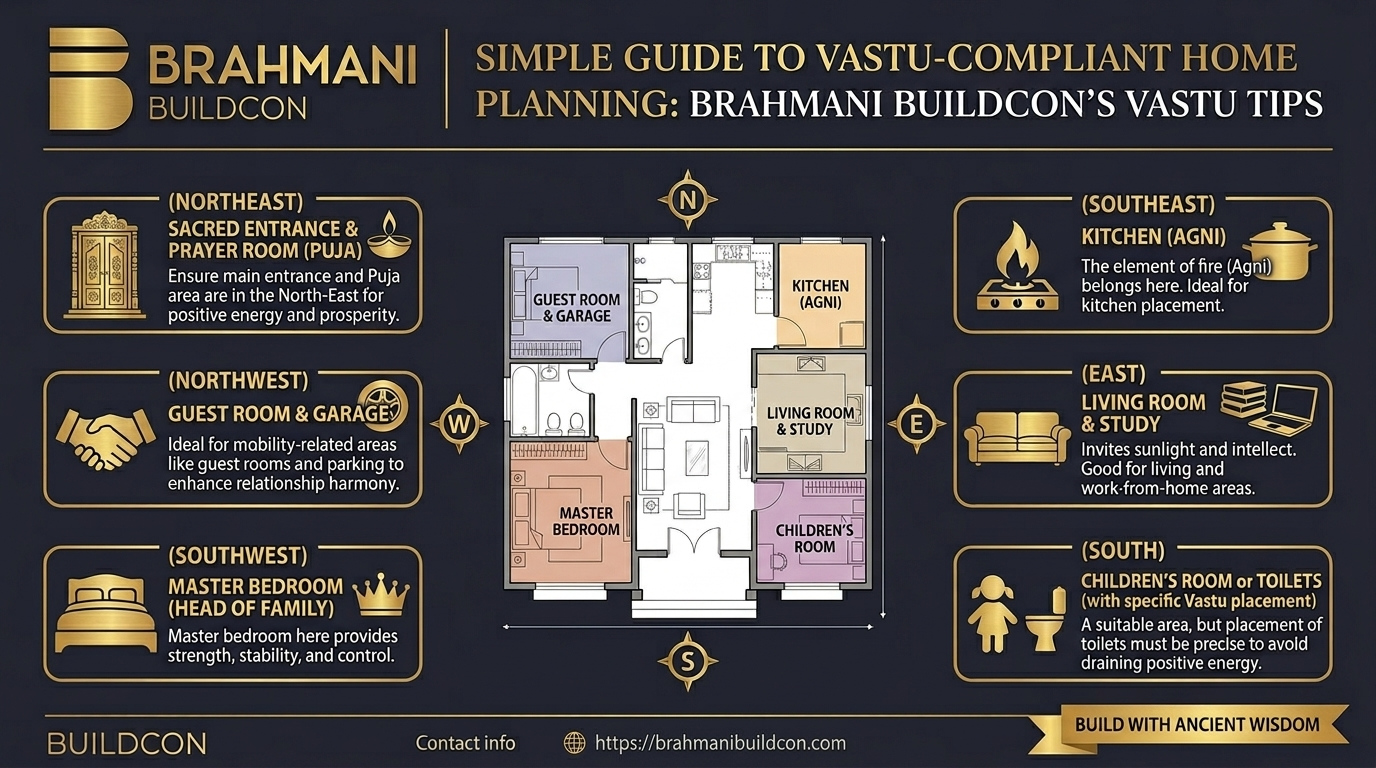
That’s why vastu often suggests master bedrooms, staircases, and storage areas in the South-West zone.
Ideal Plot Facing Direction
If you are selecting a plot, the best plot directions are:
- East-facing plot
- North-facing plot
These plots naturally get better sunlight and are considered highly positive.
But in Ahmedabad, many residential plots are south-facing because of road layouts and town planning. A south-facing plot doesn’t mean it’s bad. It only means you need smart design.
A professional contractor can still create a vastu-balanced home even on a south-facing plot. This is exactly why choosing an experienced team matters.
Main Entrance Vastu Tips
Your main entrance is the first impression of your house. Not only for guests, but also for energy flow. Vastu considers the entrance as the gateway of positivity.
Best Direction for Main Door
The most recommended directions for the main entrance are:
- North
- East
- North-East
These directions bring in sunlight, freshness, and positive vibes.
If your plot is west-facing, the main door can still be planned in the right section of the west wall, usually closer to the North-West zone.
Main Door Placement Mistakes to Avoid
Many homeowners focus on door design but ignore placement. Common mistakes include:
If the main door is directly facing the back door, energy flows out too quickly.
If the main door opens into a toilet wall or staircase, it creates discomfort.
If the entrance is in the South-West corner, it is considered heavy and not ideal.
One more practical thing: the entrance should always look open and welcoming. Even vastu aside, nobody likes entering a home that feels dark and narrow.
Living Room Vastu Tips
The living room is where energy stays active. Guests sit there, family spends time there, and it becomes the center of daily interaction.
Best Direction for Living Room
The living room should ideally be in:
- North
- East
- North-East
These directions allow natural light to enter, which automatically makes the space feel lively and positive.
If the living room is placed in South-West, it can make the house feel heavy and closed.
Seating Arrangement Vastu Tips
Even if your living room is correctly placed, seating arrangement matters.
According to vastu:
- Heavy furniture should be placed along the South or West wall
- Sitting should be arranged so that people face East or North
Also, avoid placing a mirror directly opposite the main door. Many homeowners do this for decoration, but vastu believes it reflects positive energy out.
Kitchen Vastu Tips
The kitchen is one of the most important parts of the house. In vastu, it is the fire zone, also called the “Agni corner.”
And honestly, even practically, the kitchen affects daily routine the most. If kitchen planning is wrong, you will feel it every day.
Best Direction for Kitchen
The best direction for the kitchen is:
- South-East is considered ideal because it represents fire energy.
If South-East is not possible, then:
- North-West is the second-best option.
Avoid kitchens in the North-East because the North-East is a spiritual and water zone. Mixing kitchen fire energy there creates imbalance.
Gas Stove Placement Tips
The gas stove should ideally be placed in the South-East corner of the kitchen. While cooking, the person should face East. This is one of the most commonly followed vastu rules in Gujarati households as well.
Sink and Water Placement Tips
Since kitchen has both fire and water, balance is necessary.
The sink should be in the North-East part of the kitchen. Keep distance between stove and sink. If they are too close, it creates both vastu and practical issues like heat affecting water pipes.
Bedroom Vastu Tips
Bedrooms are meant for rest, relaxation, and mental peace. That’s why vastu suggests keeping bedrooms in heavy and stable directions.
Master Bedroom Best Direction
The master bedroom should ideally be in:
- South-West
The South-West brings stability and control. That’s why vastu recommends it for the head of the family.
If South-West is not possible, west direction can also work.
Avoid the master bedroom in the North-East, because it can lead to disturbed sleep and mental stress.
Kids Bedroom Placement
Kids bedroom should ideally be in:
- West
- North-West
- East
These zones are considered good for growth and learning.
Bed Direction Vastu Rule
This is a very common question.
The best sleeping position is:
- Head towards South
- Or head towards East
Avoid sleeping with your head towards the North.
Also avoid placing the bed directly under a beam. Even if vastu doesn’t convince you, practically it creates psychological discomfort.
Bathroom & Toilet Vastu Tips
Toilets are important but they should be placed carefully because they affect hygiene and energy.
Toilet Placement Direction
Best toilet directions are:
- North-West
- South-East (if properly designed)
Avoid toilets in:
- North-East
- South-West
- Center of the house
Toilet in the center is considered one of the biggest vastu defects.
Bathroom Vastu Mistakes to Avoid
Many construction mistakes happen due to poor planning:
Toilet wall touching pooja room
Bathroom door facing kitchen
No ventilation window
Leakage and dampness
In Ahmedabad homes, dampness is common during monsoon, so bathroom waterproofing should be strong. Vastu aside, this is a construction quality issue.
Staircase Vastu Tips
A staircase is a heavy structure. Vastu says heavy construction should stay in heavy zones.
Best Staircase Direction
The staircase should ideally be in:
- South
- West
- South-West
Common Staircase Vastu Mistakes
Avoid placing stairs in the center of the house.
Avoid the staircase directly in front of the main entrance.
Avoid spiral staircase if possible.
Also, stairs should ideally move clockwise. Many architects follow this while designing.
Pooja Room Vastu Tips
Pooja room is the calmest and most positive space of the home.
Best Direction for Mandir
The best direction for pooja room is:
- North-East
If not possible, East or North is also fine.
Avoid the pooja room under the staircase or next to the toilet wall.
Idol Placement Vastu Rules
Idols should be placed so that while praying you face East or North. Keep the mandir slightly raised. Avoid keeping broken idols or unnecessary storage items in the pooja room.
Water Tank & Underground Tank Vastu
Water placement is very important because it affects balance and flow.
Underground Tank Direction
Best direction:
- North-East
- North
- East
Avoid underground tanks in the South-West.
Overhead Tank Placement
Best direction:
- South-West
- West
Avoid overhead tank in the North-East because it adds heavy weight in a zone that should remain light.
Vastu Tips for Plot Shape and Corner Plots
In Ahmedabad, corner plots are very common in TP schemes. People love them because they look premium, but vastu planning becomes more important there.
Square vs Rectangular Plot Vastu
Square and rectangular plots are best because they provide balanced space distribution.
Triangle Plot Vastu Issues
Triangle plots are tricky because they create imbalance and wasted corners. But smart layout planning and open space management can reduce the effect.
Corner Plot Vastu Tips
If you have a corner plot:
Keep North-East more open
Avoid heavy construction in North-East
Plan the main gate carefully
Avoid cutting plot corners
Corner plots naturally get better air and sunlight, which is already a positive thing.
Vastu Mistakes to Avoid During Construction
Most vastu problems happen not because of direction, but because of small construction mistakes.
Wrong Slope Direction
Your plot slope should ideally be towards:
- North
- East
- North-East
Avoid slopes towards the South-West.
Cutting Corners in Plan
Many homeowners cut corners in planning due to budget issues. Example:
Reducing open space in front
Cutting North-East corner for parking
Adjusting staircase randomly
These small changes create major vastu imbalance later.
Wrong Placement of Septic Tank
Best septic tank placement is:
- North-West
- West
Avoid septic tanks in the North-East and South-West.
A good contractor will plan a septic tank from the start. Otherwise later adjustments become expensive.
Simple Vastu Checklist Before Finalizing Plan
Before you lock your final layout, take 5 minutes and cross-check this vastu checklist. Many homeowners skip this step and later realize the kitchen, toilet, or staircase placement is creating unnecessary issues. If you confirm these points early, your construction plan becomes smoother, cleaner, and more balanced from day one.
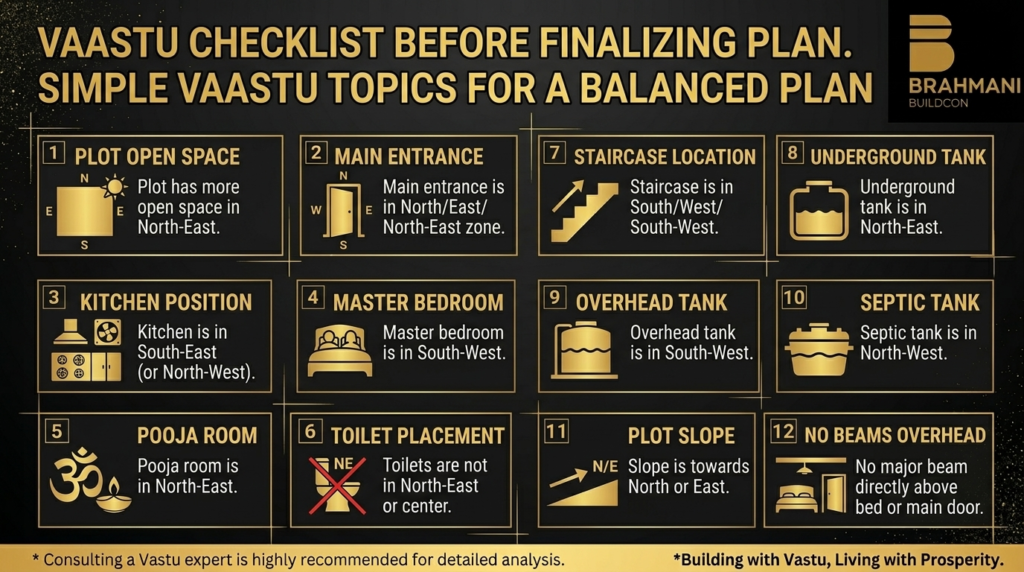
- Plot has more open space in North-East
- Main entrance is in North/East/North-East zone
- Kitchen is in South-East (or North-West)
- Master bedroom is in South-West
- Pooja room is in North-East
- Toilets are not in North-East or center
- Staircase is in South/West/South-West
- Underground tank is in North-East
- Overhead tank is in South-West
- Septic tank is in North-West
- Slope is towards North or East
- No major beam directly above bed or main door
- Center area of home is kept open and light
This checklist is simple but powerful. Even if you follow 70% of it, your home planning becomes much better.
Conclusion: Balanced Advice (Vastu + Practical Planning)
Vastu is not magic, and it’s not something that should create fear in your mind. But yes, vastu is a planning system that helps you design a home in a more balanced and practical way.
A smart homeowner doesn’t blindly follow every vastu rule. Instead, they follow vastu wherever possible and combine it with modern architectural logic.
Follow vastu wherever possible, but also prioritize:
- good ventilation
- strong structural design
- correct RCC work
- waterproofing
- material quality
- proper drainage system
Because vastu works best only when construction quality is strong.
So if you’re planning your dream house, start vastu discussion early, not after construction begins. It saves money, prevents major layout mistakes, and gives you better clarity.
And if you want vastu-friendly planning done professionally with proper execution, working with the best construction company in ahmedabad ensures your home is not only vastu-aligned but also structurally strong, practical, and built for long-term living.
Your home is a one-time project. Plan it wisely.
 by
by